Don't Blame the Kids: Why Banning E-Bikes Is the Wrong Answer
Sean Lupton-Smith of ElectricBikes.com — over 15 years in the e-bike business, and a dad — on why banning kids from e-bikes is the wrong answer, and why speed, training and infrastructure should come first.
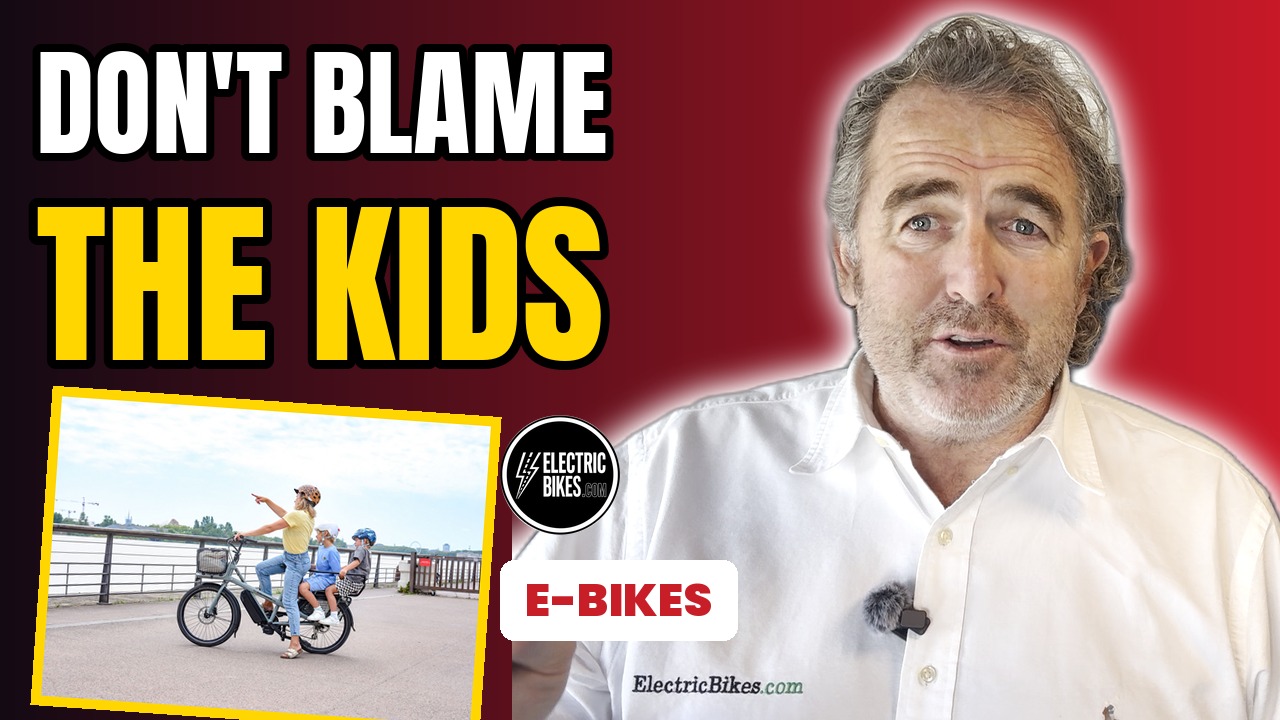
ElectricBikes.com thumbnail for this video. Inset photo: Jean Fourche / Pexels.
Sean here from ElectricBikes.com. There's an ongoing debate about kids on bikes, and particularly here in Orange County. I've been in the e-bike business for over 15 years. I had my own e-bike company, we made our own bikes here, and we went through the whole evolution of electric bikes.
There's two sides to the story. But we'd better be really careful about criticizing little kids on bikes. I've got a 12-year-old, and I'm petrified that he gets hurt. All his friends, and he himself, have an electric bike. We've sent him to two different courses, and I ride with him all the time.
A lot of people are calling for draconian regulation: don't let kids on electric bikes. But we let them go on bicycles. The key thing is the speed — not a blanket ban.
Video: ElectricBikes.com.
This is my opinion, not legal advice. For California's statewide class, helmet and age rules, see our California e-bike laws page, and always check your city and trail rules.
Kids will ride e-bikes anyway
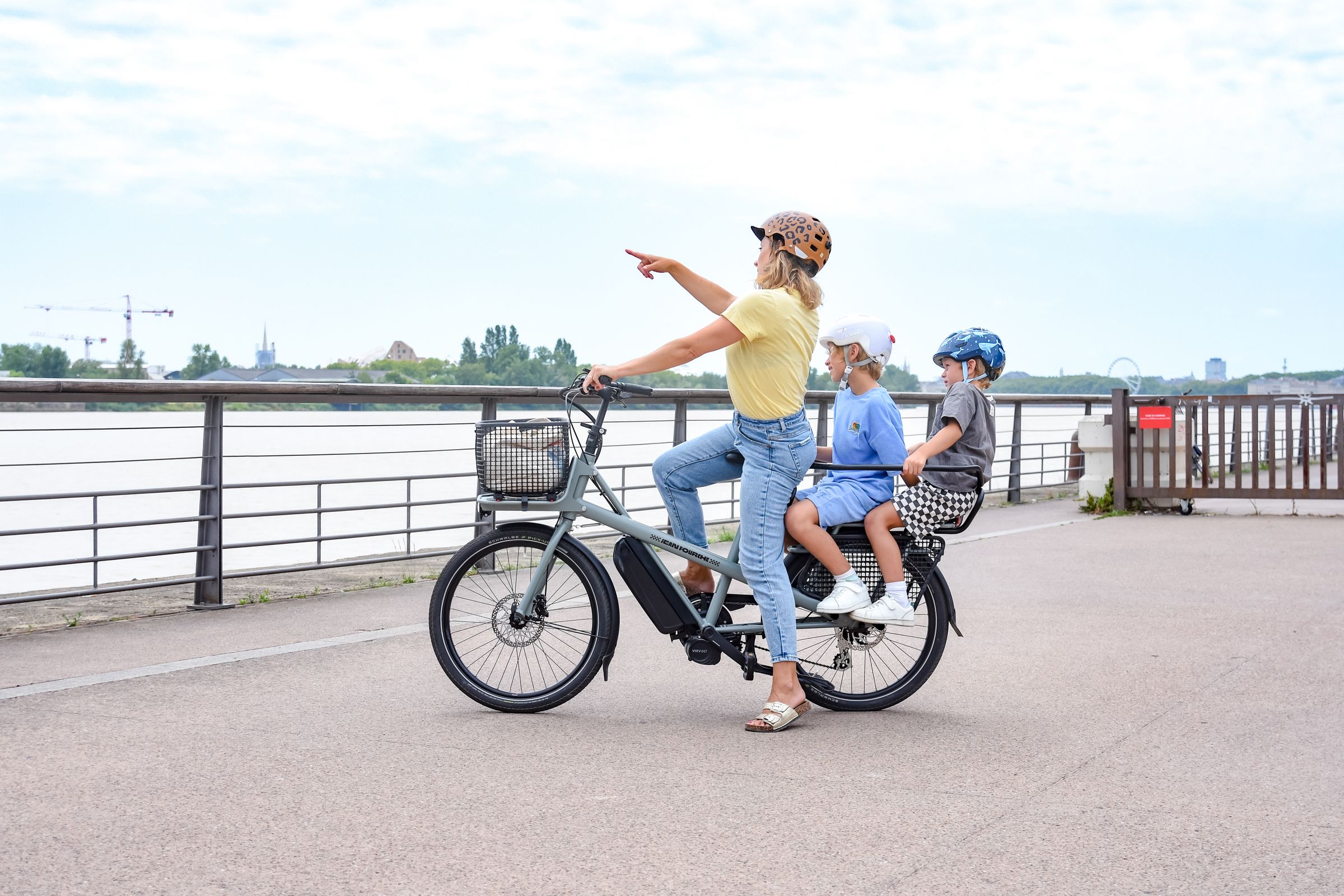
A parent and two children on a cargo e-bike in Bordeaux, France. Image: Jean Fourche / Pexels. Illustrative.
Kids are going to be on electric bikes, whether we like it or not. Some of those kids are in underserved neighborhoods. They have to walk to school, or walk to the bus and walk all the way back. Their parents are working double shifts, including at night, and they can't get up and take their kids to school. Those families are going to use bikes. Electric bikes are a fantastic solution.
They're also an amazing adventure. Put yourself back at 12, 13, 14, 15. You could go down to the beach, go fishing with your friends, go surfing, boogie boarding, swimming. If you're in the mountains, go hiking. Kids can go further. Their reach is so much further.
Here in Newport, people who lived on the peninsula could already walk to the beach. Now kids further inland, who were never able to go because their parents are too busy, or because there's no parking, or it's just a pain, can get themselves there. Kids have a lot of energy, and they want to come down here.
Electric bikes are not a one-size-fits-all problem, and "don't let kids on electric bikes" is not a one-size-fits-all answer. If you take that view, you shouldn't let them have regular bikes either.
Speed is the key, not a blanket ban
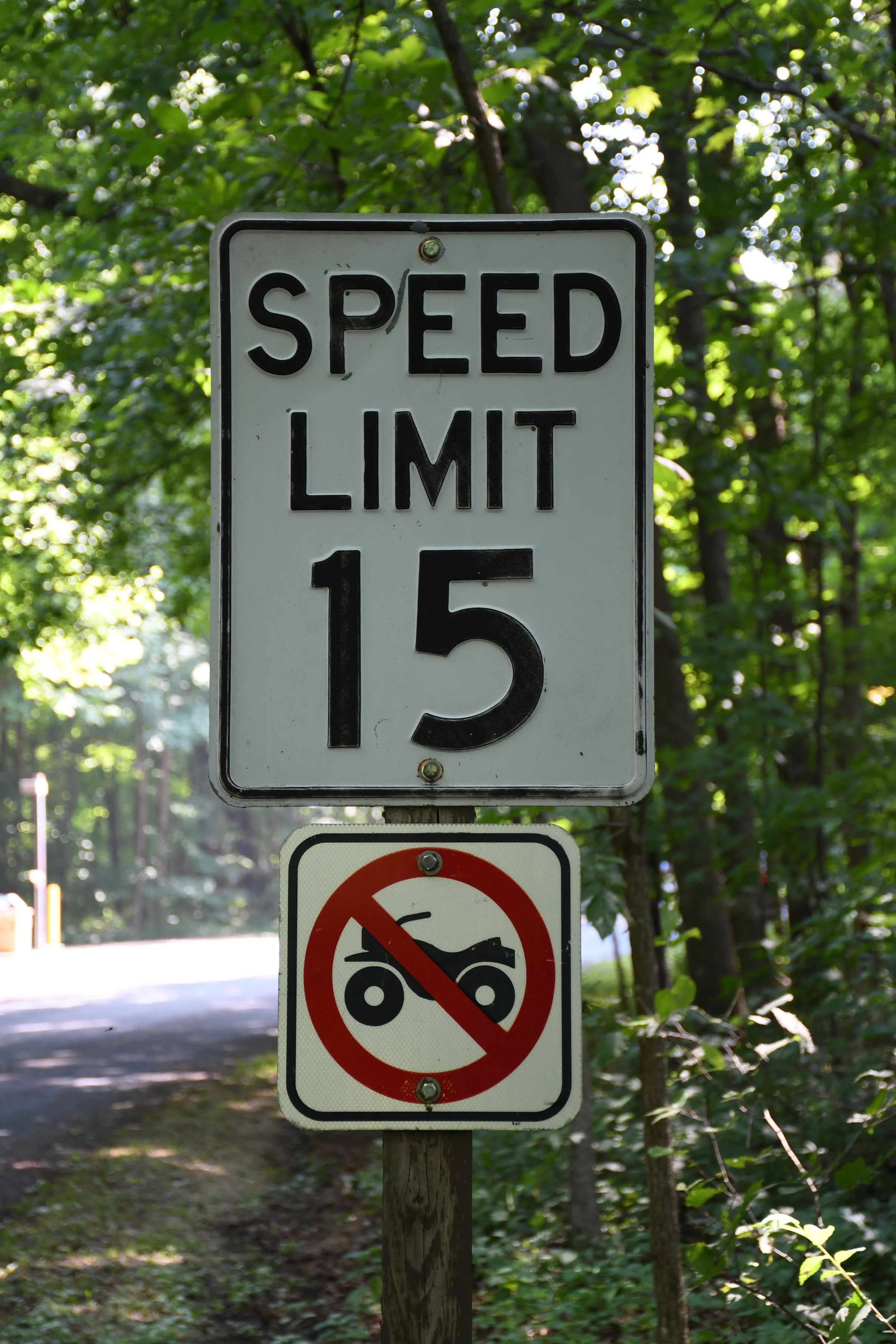
A 15 miles per hour speed-limit sign in a wooded area. Image: Kaia D / Pexels. Illustrative; not a California e-bike posting.
My point is the speed. Don't let kids go more than 15 to 20 miles per hour. Regulate it, watch it, and manage it.
California already draws that kind of line. Class 1 is pedal-assist up to 20 miles per hour. Class 2 is throttle-assist up to 20 miles per hour. Class 3 is pedal-assist up to 28 miles per hour, with a speedometer, and riders under 16 cannot operate a Class 3. The motor cap is 750 watts. That's in California Vehicle Code §312.5 and §21213.
A newer California law, AB 2346 (Chapter 842, signed September 30, 2026), goes a step further for younger riders: from 2027, sellers must give a written recommendation that riders under 16 stay at or below 15 miles per hour (Vehicle Code §28170(b)(1)(H)). Cities may also set 10, 15 or 20 miles per hour limits on bike paths and trails (§21214.8), and from 2027 there is a 10 miles per hour prima facie speed limit on sidewalks (§22352.1).
That's the direction I want. Regulate the speed. Don't take the bikes away.
Helmets, lights and training
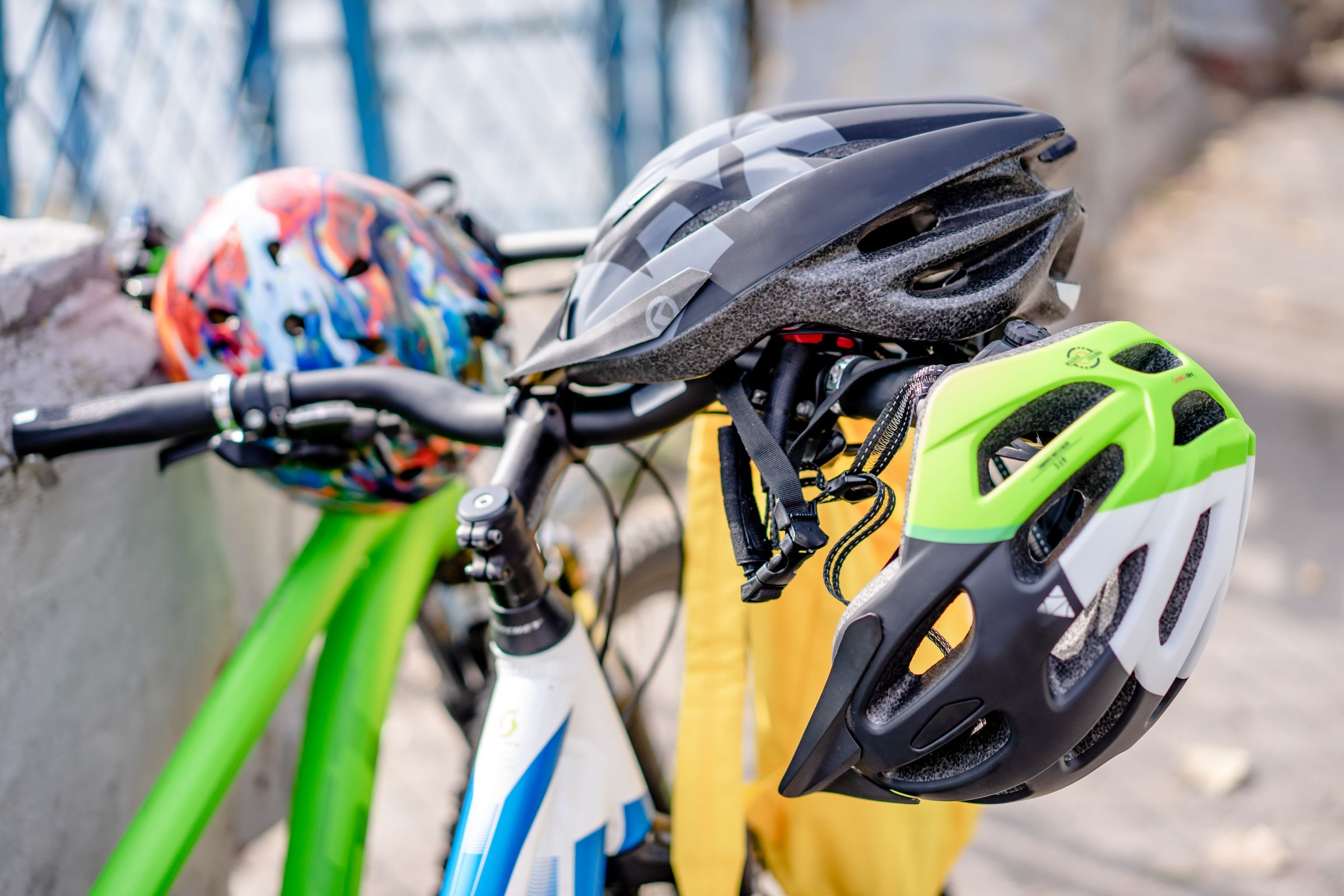
Image: Atlantic Ambience / Pexels. Illustrative.
Then let's train these kids. We've sent my son to two training schools, both in Huntington Beach, and he came away with permits. He feels a sense of accomplishment, and he is really responsible.
California already requires a helmet for riders under 18, and for every rider on a Class 3 (Vehicle Code §21212(a), and §21213(b)). Wear a helmet all the time. I'll also say this plainly: a helmet helps, but it is a bit of a false sense of security. It does not mean you are safe just because you put it on.
Make sure you have lights. Whether the kid is on a bicycle or an electric bike, get the lights working front and back, and at least side reflectors. Side lights matter too. California is moving that way in law: new e-bikes sold in the state from January 1, 2029 must have a front white lamp visible from 300 feet and a rear red lamp visible from 500 feet (AB 2346, Vehicle Code §28172(b)).
The California Highway Patrol also runs an e-bike safety and training program (Vehicle Code §21212(f)). Use it.
Fix the streets — and don't let drivers off the hook
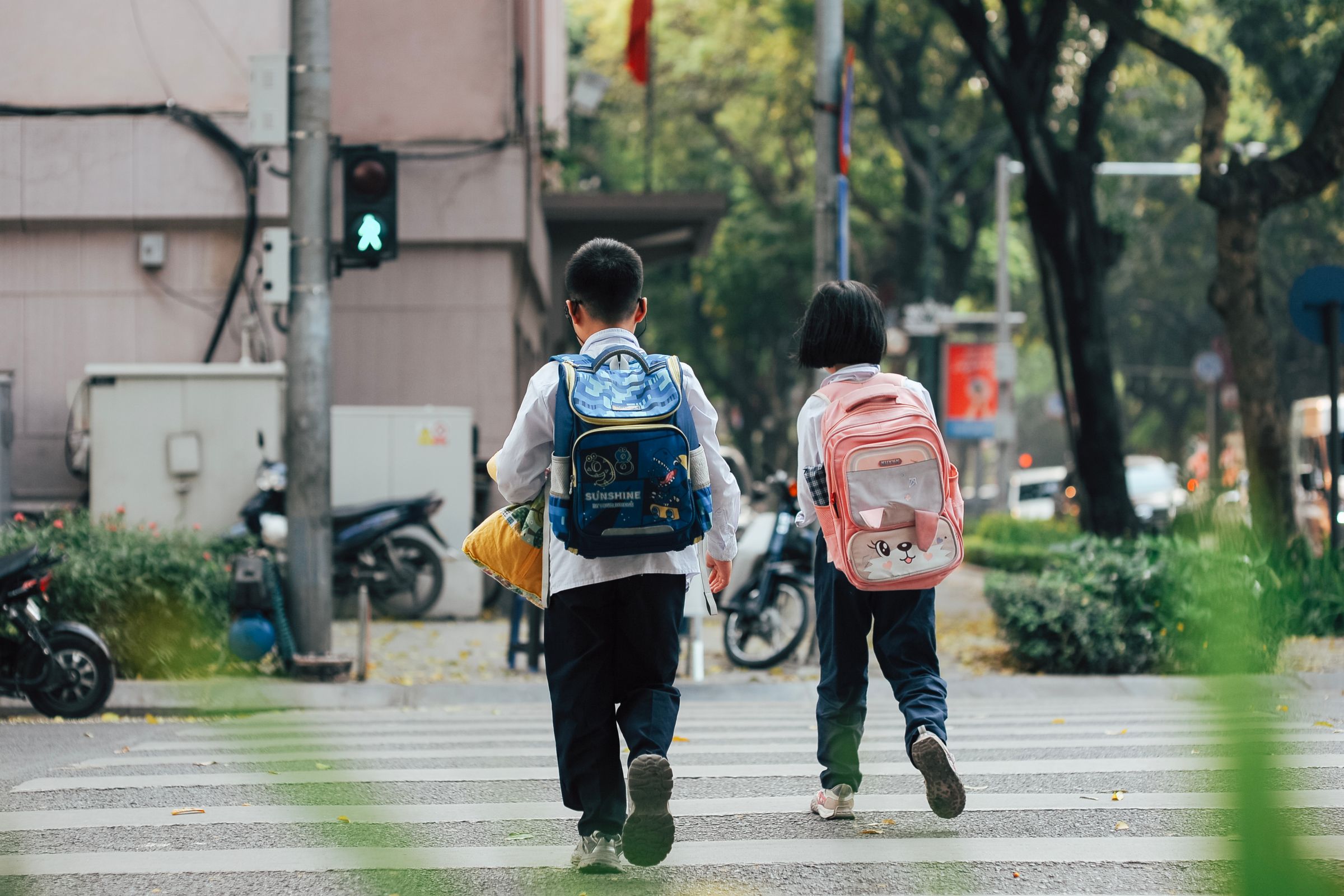
Image: Thang Nguyen / Pexels. Illustrative.
Why are we giving kids such a hard time about electric bikes when we don't even have the proper infrastructure?
The stance that says stop all these kids on electric bikes — let them walk, let them take regular bikes, let their parents drive them everywhere — clogs up the parking and makes traffic worse than it already is. Of course you drive a kid when the weather is bad, or they have a lot to carry, or there's some other reason. But if the infrastructure is good, they don't all have to be in cars.
We've already watched kids disappear from the walk to school. The National Center for Safe Routes to School, in "How Children Get to School: School Travel Patterns from 1969 to 2009" (2011), found that 48 percent of K-8 students usually walked or biked to school in 1969, compared with 13 percent in 2009. The share arriving by personal vehicle went from 12 percent to 45 percent. The same report, using the 2009 National Household Travel Survey, found that 10 to 14 percent of morning-peak personal-vehicle trips were taking K-12 students to school.
You go to Holland, you go to Germany, you go to Belgium, and the infrastructure is great. Here, we often don't even have one-way streets near schools. If you have a school, and kids are on bikes, walking, and on electric bikes, why not change those roads to one-way traffic? One way in, another way out. Then cars, buses and trucks all go one way, and you can have a dedicated bike lane and a dedicated pedestrian lane.
Telling kids not to be on e-bikes is not going to solve the problem. The bikes are out there. If you follow that logic all the way, you end up outlawing bicycles, and then almost outlawing walking to school.
We're also losing sight of the people in the cars. You can give kids a hard time on bikes, but what about distracted drivers? In 2024, 3,208 people were killed in U.S. crashes involving distracted drivers (NHTSA). That's a whole community effort, not a kid problem.
Let's get the infrastructure right. Street lamps. Sidewalks and paths that work for bikes. One-way traffic in congested areas where kids are riding. And let's not let city officials and city planners off the hook just because "no e-bikes" sounds like a solution.
Some parts of the infrastructure are so bad that cars are parked on both sides of a two-way street, and there is no place even for regular bicycles. The biking community can attest to that.
Don't take these kids off the bikes
Image: ElectricBikes.com.
At our house, the rules are simple. My son has a cell phone and an e-bike — I know that's a lot — but if he's caught doing tricks, wheelies, skidding out, hopping over pavements, he loses the bike and the phone. He's really responsible, and it gives him a lot of freedom. We also route his rides each time so he uses bike paths, and if a sidewalk is really wide, we'd rather he use it than a busy road — even though, technically, you often shouldn't be on the sidewalk.
I also want bikes that are roadworthy: brakes, tires, frame, and cargo that doesn't unbalance the bike. Too much weight on the back lifts the front wheel and compromises the steering. I'd like to see permits and a real check that the bike is maintained. That's my recommendation, not a claim that California already requires a license. It doesn't, as our California e-bike laws page notes. Check your local rules.
Don't take these kids off the bikes. Get them on speed limits, roadworthy bikes, permits, education — and infrastructure. Let's not lose sight of that.
I made a longer cut of this argument on video, at the top of this post. If you want our reviews, or a place to start on the rules, go to ElectricBikes.com. I also wrote earlier about the same idea: Regulate the E-Bike. Teach the Rider. Fix the Road..
This is my opinion, not legal advice. ElectricBikes.com is an independent review site. Check your local e-bike rules.
Share this post


Ride smart
The safety essentials, in one place.
Helmet safety
Which certifications actually protect you at e-bike speeds.
Read moreBattery fire safety
UL certification, charging habits, and current recalls.
Read moreCrash & injury data
What the numbers say — and what to do if you're hurt.
Read moreSafety statistics
Sourced figures on injuries, fires, and recalls to cite.
Read moreE-bike laws by state
Class rules, age limits, and where you're allowed to ride.
Read moreInjured? Your options
How e-bike injury claims work and where to get help.
Read more