Regulate the E-Bike. Teach the Rider. Fix the Road.
Opinion · By Sean Lupton-Smith
Sean Lupton-Smith argues for appropriate e-bikes, rider training and safer routes for young people, with clear distinctions between policy proposals and current law.
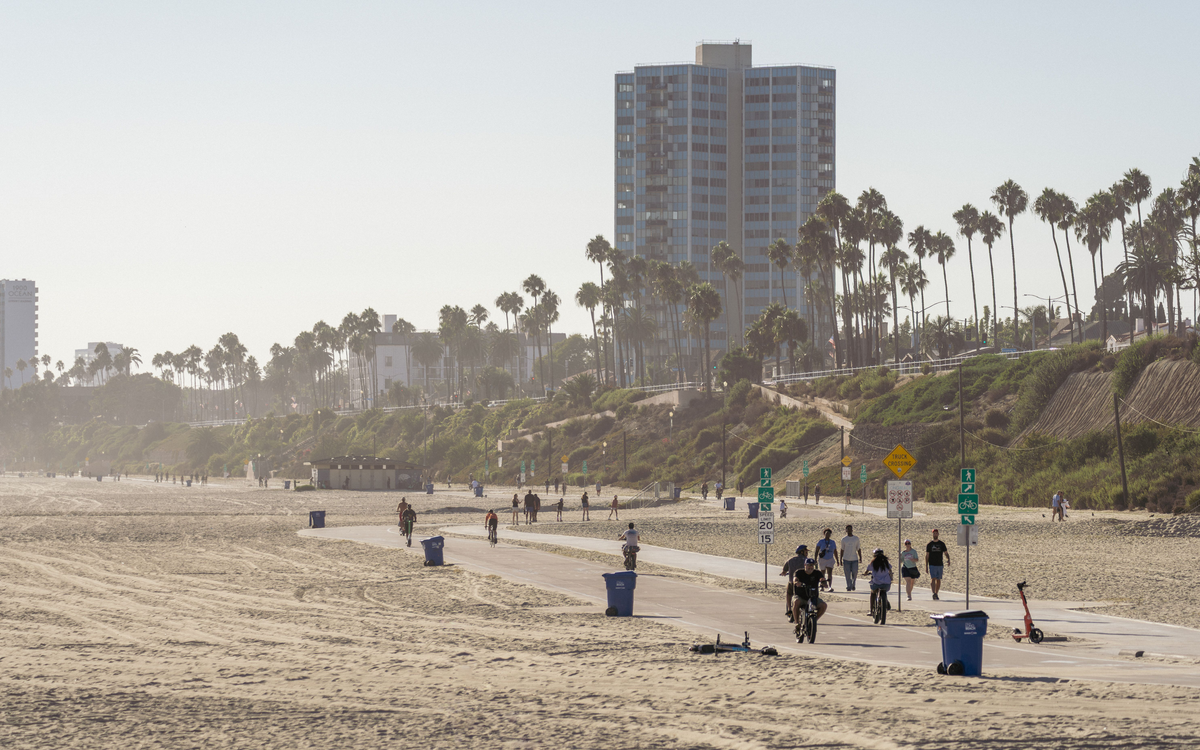
ILLUSTRATIVE — The beach path in Santa Monica, California. Infrastructure illustration; rider ages and e-bike classes not established.
I'm 58. I've spent about 16 years in the e-bike business in California, and I've watched this thing go through just about every stage: the days when hardly anybody knew what an e-bike was, the COVID rush, the quieter stretch afterward, and what, from where I sit, looks like a steadier market now.
I'm a publisher and affiliate marketer at ElectricBikes.com, an expert resource on all things e-bikes: we publish reviews, opinion pieces and blogs, follow the news, and serve as expert witnesses. I don't sell e-bikes; the site earns affiliate commissions, and I'm invested in the category's credibility and safety.
I've also been around long enough to know that two things can be true at once.
Some of the machines being called e-bikes have no business underneath a child. And a properly regulated e-bike can give a young person something worth protecting: a little independence.
We need to stop pretending those are the same argument.
Let me be clear about the first part. I do not support putting children under 16 on high-powered electric motorbikes and sending them into traffic. Road judgment is learned. Responsibility is learned. A motor and a pair of pedals don't magically supply either one.
But a compliant, low-speed electric bicycle is a different proposition. In California, Class 1 means pedal assistance that cuts off at 20 miles per hour. Class 2 allows throttle assistance, also cutting off at 20. Class 3 provides pedal assistance up to 28, and state law already prohibits children under 16 from operating one. Local restrictions can go further.
Those distinctions matter. So does this one: an assistance cutoff is not a promise that a bike cannot travel faster downhill. And 20 miles per hour is not harmless. A crash at that speed can cause serious injury or death. Around pedestrians, intersections or poor visibility, a rider may need to go much slower.
I am not arguing for a magic safe speed. I am arguing for an honest distinction between a legal, limited-assistance e-bike and a machine that does not meet the rules at all.
Then we should ask what the legal bike makes possible.
Think about a kid who wants to get to the beach with a surfboard. Or take a skateboard to meet friends. Or get to school, practice or an afternoon game without waiting for somebody to finish work and drive.
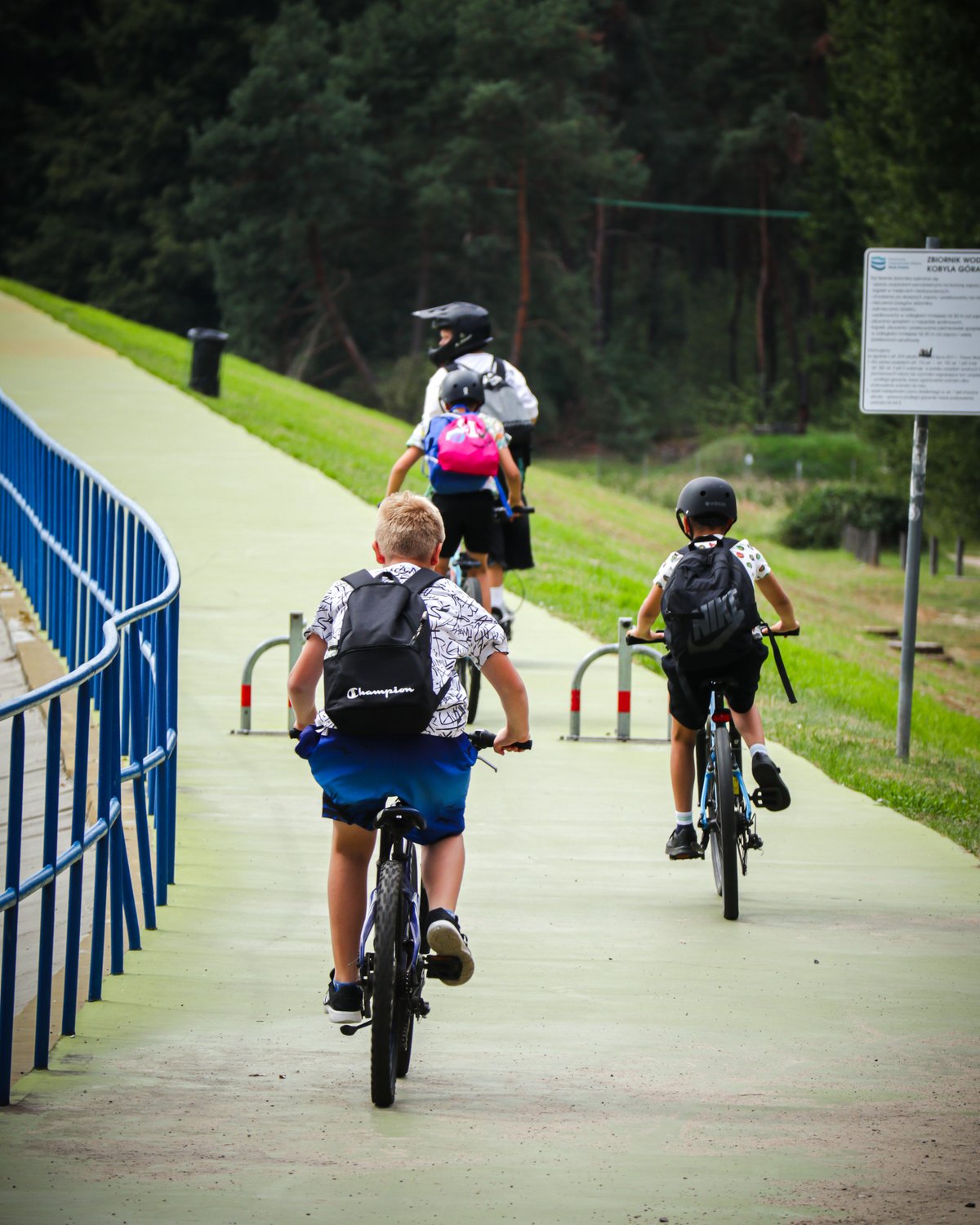
ILLUSTRATIVE — Young riders on a park path. Illustrative cycling photograph; e-bike status and location not established.
If you live close enough to walk, wonderful. If you're five, ten or fifteen miles away, the conversation changes. Those are very different journeys, and not every distance or route is appropriate for every child. But “just walk” is not a serious answer to all of them. Neither is assuming that every household has a spare adult and a spare car.
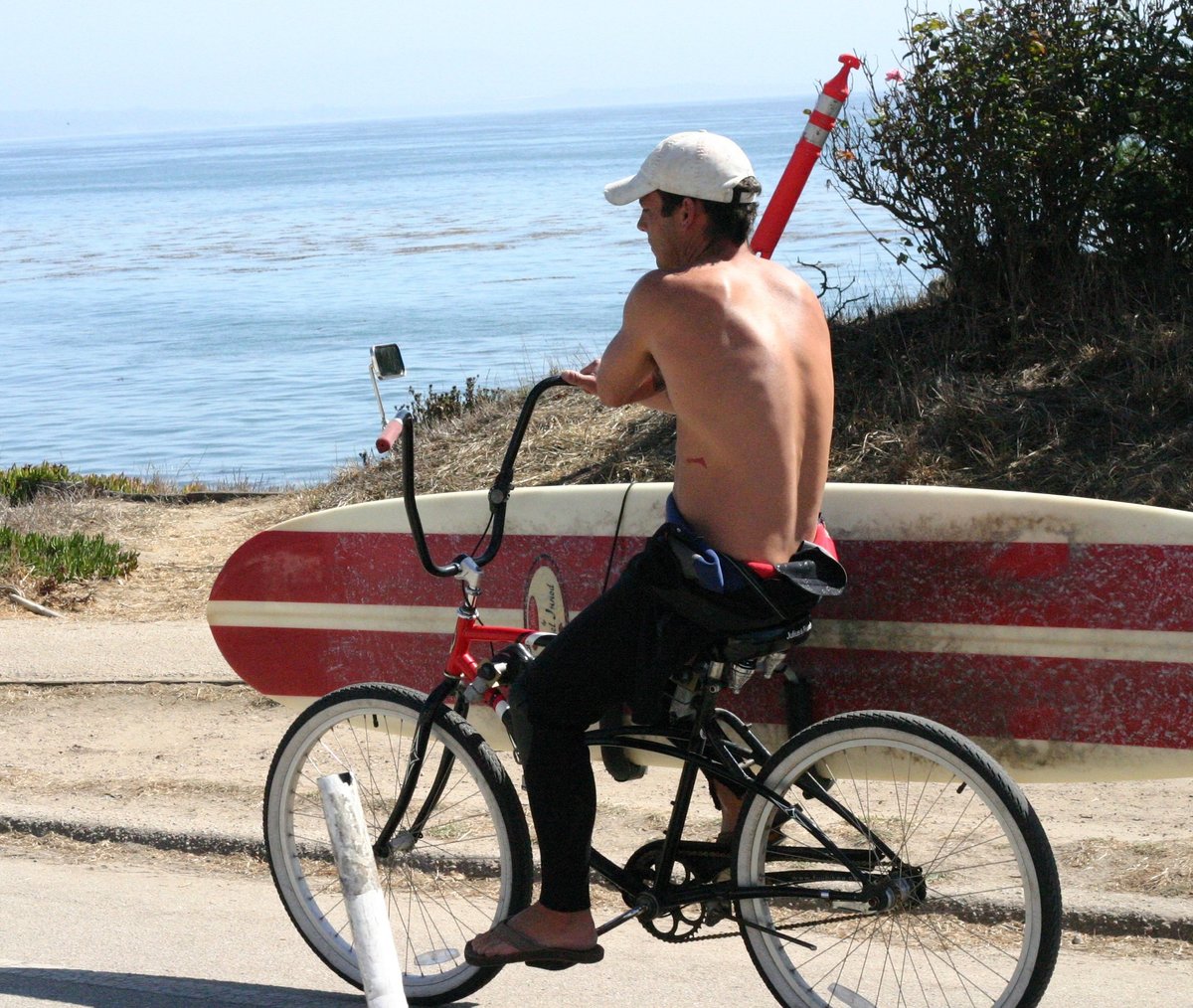
ILLUSTRATIVE — A bicycle surfboard rack. Illustrative equipment detail; no e-bike classification or California location established.
Surfboard rack — Richard Masoner / Cyclelicious, CC BY-SA 2.0, via Wikimedia Commons. Changes: resized. No crop. Photo adaptation: CC BY-SA 2.0. CC BY-SA 2.0 licence
For a parent juggling several children, one suitable trip a child can make independently can change the afternoon. When a bike journey replaces a car journey, that's one less car trip to fit onto the road or into the school pickup line. I'm not promising an end to traffic. I'm saying that the alternative deserves a place in the discussion.
There is a quieter benefit, too. Leaving home, making a plan, arriving somewhere and getting back is part of growing up. We should help children learn that responsibility, not assume the only acceptable place for them is in the back seat.
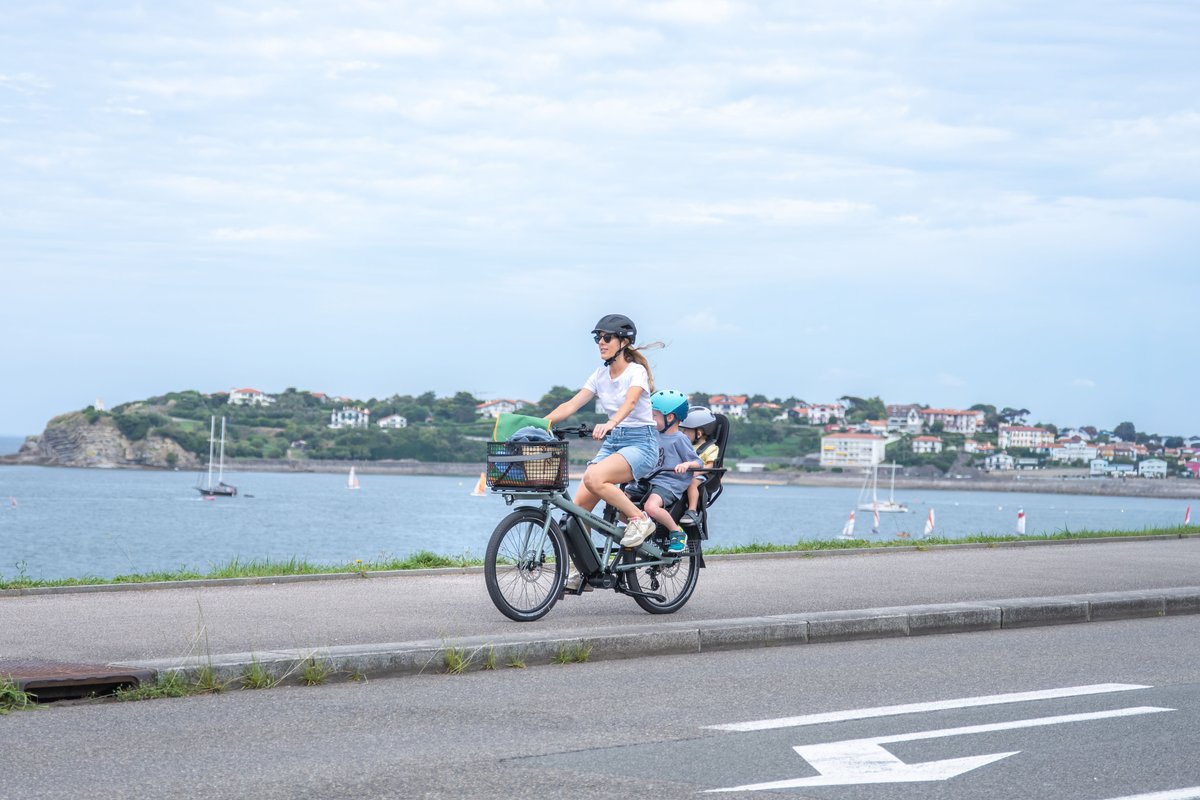
ILLUSTRATIVE — Family cycling on the French coast. Illustrative photograph—not California or evidence of children independently operating compliant e-bikes.
None of this excuses reckless riding. Stop signs mean stop. Pedestrians deserve room and respect. Helmets belong on heads, properly fitted and fastened. Parents need to know what they are buying, whether their child can handle it, and where that child will ride. Shops and manufacturers have responsibilities, too. Don't market a motorbike as a child's bicycle and leave a family to discover the difference later.
But adults also need to look beyond the handlebars.
Too often, the route we offer is a strip of paint beside moving cars, an awkward crossing, or a bike lane that disappears just when a rider needs it. Add a distracted driver or a driver who fails to look for a cyclist, and a child's good intentions are not enough.
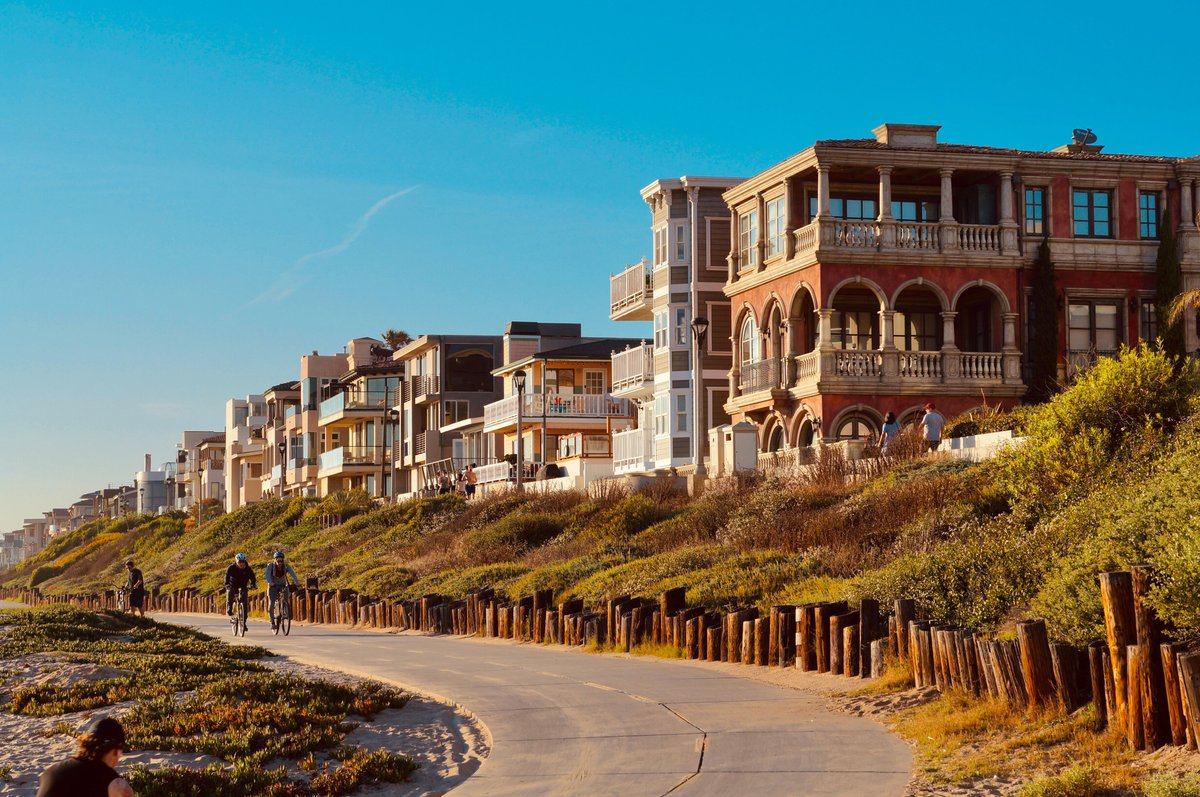
ILLUSTRATIVE — Cycling along a Los Angeles beach path. Infrastructure illustration; rider ages and e-bike classes not established.
Speed matters. Behavior matters. Infrastructure matters. We won't make children safer by choosing just one of those and ignoring the others.
I want us to learn from the Netherlands, Belgium and Germany, where there are communities that treat cycling as everyday transport, not an inconvenience to squeeze around cars. Their rules and networks differ, and their ordinary electric-assist bicycles aren't identical to California's throttle-assisted models. The lesson isn't to copy every rule. It's to plan for people to ride somewhere useful, with connected routes and crossings that take their safety seriously.
A ban is easier to announce than a connected bike network is to build. That doesn't automatically make it the better answer.
Here's the approach I'd rather see: proper regulation, with a practical path to earning independence.
Require front and rear lights. Require strong, working front and rear brakes. Establish a certificate of roadworthiness so the bike's condition and compliance are checked, not guessed at.
Then teach the rider. An online test should cover the rules and the situations that catch people out. A practical test should show that a young person can brake, signal, yield, look behind and make sensible decisions. Follow that with an age-appropriate permit—not a blank check to ride any machine anywhere.
That's my proposal, not a description of a statewide permit system that already exists. It would need sensible age rules, affordable access, and help for families who cannot pay for another layer of paperwork. Training should open a door, not quietly become a ban by another name.
And none of those requirements should become an excuse to postpone safer streets.
To me, a regulated e-bike deserves its own conversation: not an ordinary pedal bicycle, not a motorbike, not a moped, not a car. Legally, California treats compliant e-bikes as bicycles. Practically, we still need to teach the differences and match the bike, the rider and the route.
Kids don't have a voice. They're just trying to get out there and grow up, and we need to provide them the opportunity.
So keep the dangerous machines out of children's hands. Hold reckless riders accountable. Give parents clear rules and give children real training.
But don't throw their freedom out with the bathwater. Give them a responsible way to go—and build roads that let them get home.
Watch the video
Photo credits: Illustrative cycling photographs, not proof of California-compliant child e-bike use. Youth park path: Piotr Baranowski / Pexels; Santa Monica beach path: Soly Moses / Pexels; Los Angeles beach path: Lucas Carlini / Pexels; French coast family: Jean Fourche / Pexels. Pexels License: https://www.pexels.com/license/ . Surfboard rack — Richard Masoner / Cyclelicious, CC BY-SA 2.0, via Wikimedia Commons: https://commons.wikimedia.org/wiki/File:Surfboard_rack.jpg ; licence: https://creativecommons.org/licenses/by-sa/2.0/ . Changes: resized. No crop. Photo adaptation: CC BY-SA 2.0. Other photographs retain their separate Pexels licence terms.
Share this post


Ride smart
The safety essentials, in one place.
Helmet safety
Which certifications actually protect you at e-bike speeds.
Read moreBattery fire safety
UL certification, charging habits, and current recalls.
Read moreCrash & injury data
What the numbers say — and what to do if you're hurt.
Read moreSafety statistics
Sourced figures on injuries, fires, and recalls to cite.
Read moreE-bike laws by state
Class rules, age limits, and where you're allowed to ride.
Read moreInjured? Your options
How e-bike injury claims work and where to get help.
Read more