
What we actually built
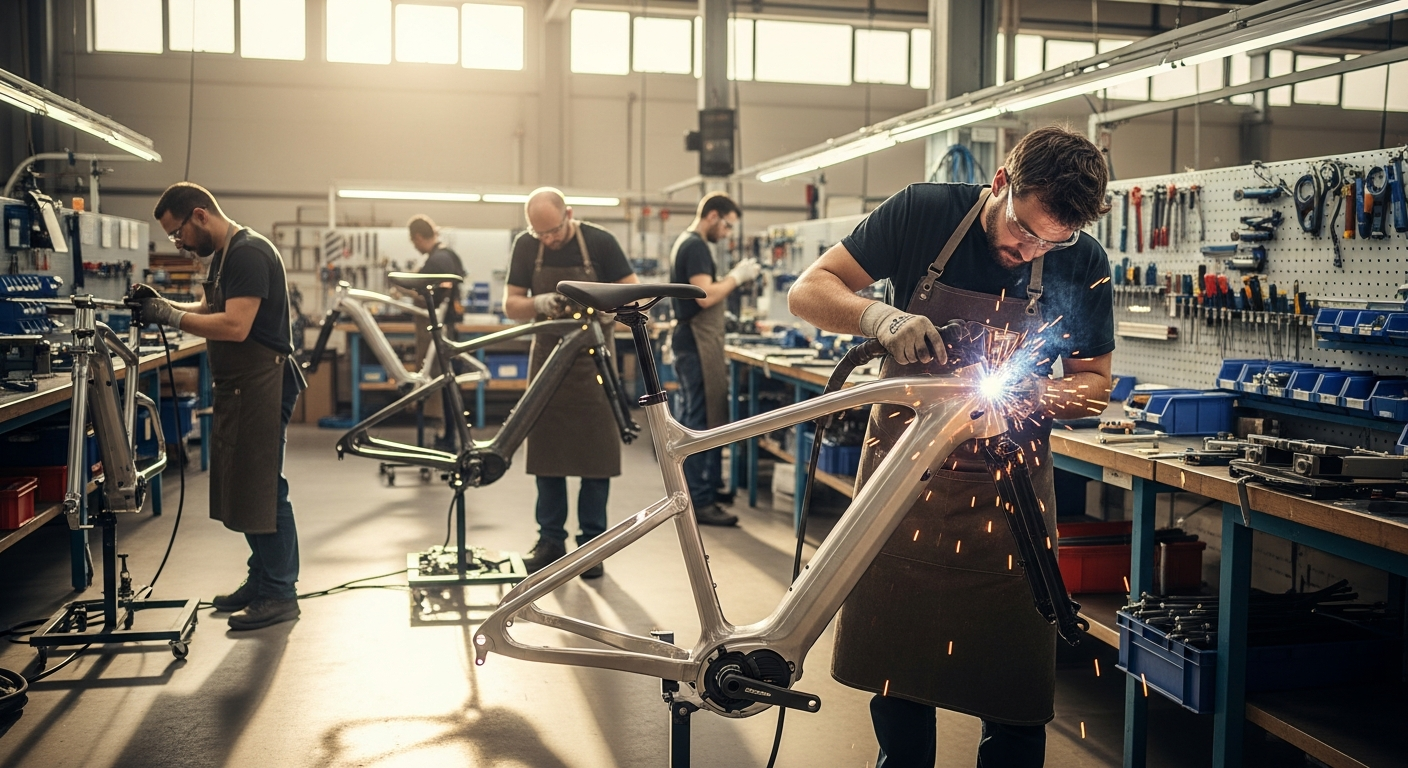
Our team assembled cruiser-style e-bikes one at a time in Southern California. Customers chose their frame color, motor power, battery size, and accessory loadout. Each bike was hand-built, hand-tested, inspected, road-tested, and shipped fully assembled with a serial number we knew personally.
That's not the e-bike industry standard. The standard is: a sealed container arrives from a Chinese OEM, bikes get unboxed, tires inflated, shipped to your door. Most 'American e-bike brands' are exactly that.
Why that changes how we review
We see the seams. Literally. When a reviewer takes a fat-tire e-bike off-road and the chainstay weld cracks, the industry calls it 'a defect.' We call it what it is: bad welding fixture geometry, predictable from the bike's chainstay angle and weld bead shape.
Battery pack quality is the same story. The BMS (battery management system) is the most important component on the bike — and the cheapest place for manufacturers to cut corners. Generic BMS chips with no thermal cutoff cause fires. We know how to spot them in product photos.
The questions to ask any e-bike brand
Where is the BMS sourced? Is it a name-brand chip (TI, NXP, Infineon) or generic?
Are the cells Samsung/LG/Panasonic/Sony, or unbranded Chinese? (Cell brand is on the cell wrapper — ask for photos.)
Is the frame welded in a jig, or hand-tacked? (Jig welds are repeatable; hand-tacks vary by welder.)
Who is the warranty actually with — the brand or a third-party administrator? (This matters when you file a claim.)
"When you've hand-built thousands of bikes yourself, you can spot the brand that just unboxed theirs from a shipping container in about thirty seconds."